


Why Is Choosing the Right Playway School in Panchkula Important for Your Child’s Early Growth?

The early years of childhood are filled with curiosity, imagination, questions, and discovery. During this stage, children learn naturally by observing their surroundings, playing, communicating, and trying new things. This is why choosing the right Playway School in Panchkula can play an important role in giving your child a happy and strong beginning to their educational journey. A good preschool should not only introduce children to basic concepts but also help them become confident, independent, creative, and comfortable in a learning environment.
For parents looking for an engaging beginning, a Montessori Playway School in Panchkula can be an excellent choice because Montessori-inspired learning encourages children to explore and learn through hands-on experiences. The right combination of play, activities, interaction, and guidance can make the first school experience enjoyable rather than stressful.
What Is a Playway School?
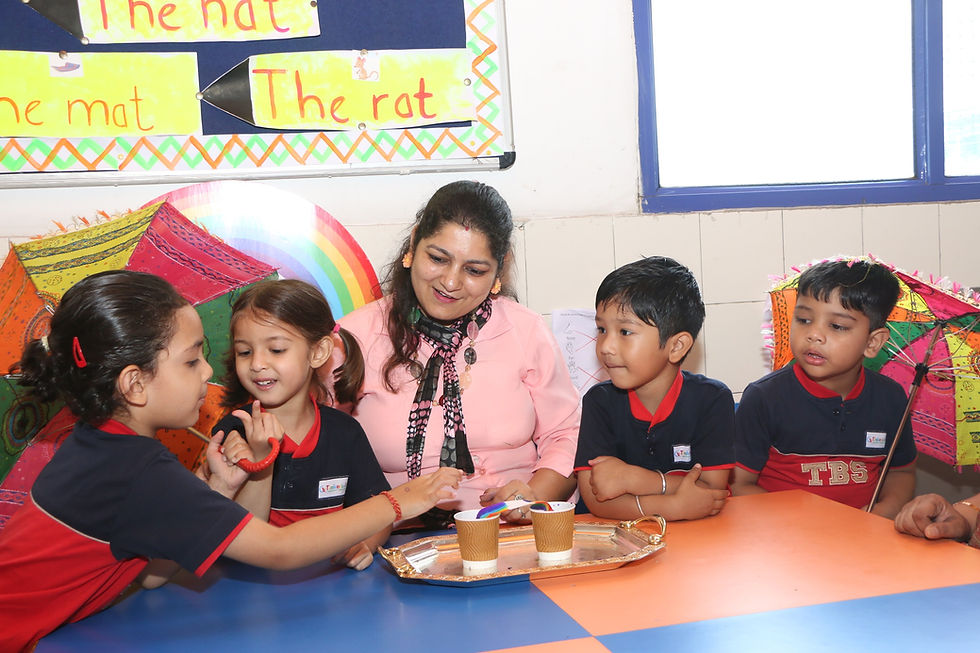
A playway school is an early learning environment where children learn important concepts through play and practical activities. Instead of expecting young children to sit for long periods and memorize information, teachers use stories, games, art, music, movement, puzzles, role-play, and other interactive activities.
At this age, children have short attention spans and learn best when they are actively involved. A colourful classroom, interesting learning materials, friendly teachers, and opportunities to explore can make education more meaningful.
The purpose is not simply to teach alphabets or numbers. Early education should help children understand how to communicate, share, listen, observe, solve simple problems, and express their feelings.
Why Is Play-Based Learning Important?
Play is a natural way for young children to understand the world around them. When children play with blocks, for example, they may learn about shapes, balance, size, and problem-solving without even realizing that they are learning.
Similarly, storytelling can improve vocabulary and listening skills, while group games can teach children cooperation and patience. Art activities can encourage creativity, and outdoor play can support physical development.
A strong early learning program brings these experiences together so children can develop different skills at the same time. Tinkerbelle's curriculum describes its approach as immersive, fun, and productive, with learning driven by children's questions and supported by play, social-emotional learning, expression, and outdoor experiences.
How Does a Playway Approach Support Child Development?
Early childhood development is not limited to academic learning. Children need opportunities to grow socially, emotionally, physically, creatively, and intellectually.
Cognitive Development
Activities such as puzzles, sorting games, building blocks, matching exercises, and simple problem-solving tasks encourage children to think and make decisions. These experiences gradually improve their ability to understand patterns, remember information, and find solutions.
Language Development
Children develop language through conversations, stories, songs, classroom discussions, and interactions with teachers and classmates. A friendly environment encourages children to speak without being afraid of making mistakes.
Social Development
Preschool is often one of the first places where children regularly interact with other children outside their family. Group activities help them learn important habits such as sharing, taking turns, listening to others, and working together.
Emotional Development
Young children need to feel safe and understood. Caring teachers can help children identify and express their emotions. Over time, this can help build confidence and emotional awareness.
Physical Development
Running, jumping, dancing, outdoor games, and activities involving hand movements help children develop gross and fine motor skills. These skills are important for everyday activities as well as future classroom tasks such as writing.
What Makes a Good Preschool Environment?
The learning environment has a major influence on how children feel about school. A good preschool should feel welcoming, safe, and stimulating without becoming overwhelming.
Classrooms should provide age-appropriate learning resources that encourage children to touch, observe, experiment, and explore. Tinkerbelle's website highlights colourful classrooms, interactive smart boards, learning centres, props, books, and toys designed to support interactive and exploratory learning.
The environment should also allow children to move and participate. Young learners should not be expected to remain seated throughout the day. A balanced routine can include classroom activities, storytelling, music, movement, creative work, outdoor experiences, and group interaction.
Why Consider a Montessori-Inspired Approach?
Montessori education places importance on independence, exploration, hands-on experiences, and learning at a child's pace. When these principles are combined with play-based learning, children can receive opportunities to discover concepts rather than simply being told the answers.
A Montessori Playway School in Panchkula can therefore provide an environment where children are encouraged to make choices, work with learning materials, complete activities, and gradually become more independent.
The objective is not to rush children into formal academics. Instead, the focus should be on developing the basic skills and habits that make future learning easier.
What Should Parents Look for Before Choosing a Preschool?
Choosing a preschool requires more than simply comparing names or facilities. Parents should consider whether the environment is suitable for their child's age, personality, and learning needs.
One of the first things to check is the school's learning philosophy. Ask whether children get enough opportunities for play, exploration, creativity, and interaction.
Parents should also understand the daily routine. A balanced schedule should include both teacher-guided and child-led activities. Tinkerbelle states that its daily structure includes teacher-led small-group sessions, independent directed activities, and child-initiated learning.
Teacher-child interaction is another important factor. Young children need patient educators who can understand their individual needs and encourage them positively.
Safety and cleanliness should also be considered. Parents can visit the campus, observe classrooms, understand the school's communication process, and ask questions about how teachers support children who are new to school.
How Can Activities Make Learning More Interesting?
Children learn more effectively when learning feels enjoyable. Simple activities can introduce important concepts without making children feel that they are studying.
For example, a colour-sorting activity can introduce classification. Building blocks can develop spatial awareness. Storytelling can encourage imagination and language development. Music and movement can improve coordination. Gardening or nature-based activities can encourage children to observe their surroundings.
Creative activities are equally important. Drawing, painting, clay work, craft, dance, and pretend play give children ways to express ideas that they may not yet be able to explain through words.
This type of learning can also help teachers understand children's interests and strengths.
Why Is Individual Attention Important?
Every child develops differently. Some children begin speaking confidently very early, while others take more time. Some enjoy group activities, while others prefer independent exploration.
A good preschool recognizes these differences rather than expecting every child to behave and learn in exactly the same way.
Individual attention can help teachers identify what interests each child and provide appropriate encouragement. It can also help children feel comfortable asking questions and trying new activities.
Tinkerbelle describes its learning philosophy as child-centred and says that it focuses on curiosity, creativity, confidence, and personalized attention, alongside social, emotional, and physical development.
Preparing Children for Their Next Educational Stage
Preschool is the beginning of a much longer educational journey. The goal should be to develop a positive attitude toward learning.
Children who learn how to listen, communicate, cooperate, follow simple routines, make choices, and complete age-appropriate tasks gradually become better prepared for the next stage.
Tinkerbelle offers a progression from Playway/Pre-Nursery through Foundation Year I, Foundation Year II, and Foundation Year III, corresponding to Nursery, LKG, and UKG.
This type of progression can help children become familiar with the school environment while their learning gradually becomes more structured.
Why Is Parent-School Communication Important?
Parents and teachers share an important responsibility during the early years. Children spend time learning at school and also continue developing through experiences at home.
Regular communication allows parents to understand what their child is learning and how they are adjusting to school. Teachers can also share observations about participation, communication, interests, and social interaction.
This partnership can help parents support learning at home without putting unnecessary academic pressure on the child.
Simple activities such as reading together, talking about the day's experiences, drawing, sorting objects, singing songs, and exploring nature can continue the learning process outside school.
Creating a Positive First School Experience
For many children, preschool is their first experience away from home for an extended period. This transition can sometimes be difficult.
A caring environment can make the process easier. Teachers who welcome children warmly, maintain predictable routines, and encourage participation can help them gradually become comfortable.
Parents can also prepare children by talking positively about school, encouraging independence, and allowing them to practice simple tasks such as carrying their bag, putting away toys, and communicating their needs.
The first school experience can influence how children feel about education for years to come. Therefore, the focus should be on creating positive associations with learning.
Why Can Tinkerbelle Be Considered for Early Learning in Panchkula?
Parents exploring early education options can look at Tinkerbelle for its child-centred and play-based approach. The school offers programs beginning with Playway/Pre-Nursery and continuing through UKG, while its learning environment includes activities, learning centres, books, toys, interactive technology, music, movement, storytelling, and other experiences.
The school also states that it has been involved in early childhood education since 2005 and provides a structured yet joyful environment for young learners.
Parents can visit the school, understand the curriculum, speak with educators, and decide whether the environment matches their child's needs.

Conclusion: Giving Your Child a Happy Start to Learning
The preschool years are about much more than learning letters and numbers. They are about discovering the world, developing communication, making friends, building confidence, becoming independent, and learning how to enjoy new experiences.
When parents search for a Playway School in Panchkula, they should look beyond academics and consider the overall learning environment, teaching approach, teacher-child interaction, safety, activities, and opportunities for development.
A Montessori Playway School in Panchkula can offer an engaging combination of hands-on exploration, independence, creativity, and play-based learning. The right environment can help children develop a strong foundation while allowing them to enjoy the simple excitement of being curious.
For parents considering early education, visiting the school and understanding its approach can be a valuable first step. With the right guidance, children can begin their educational journey with confidence, curiosity, and a genuine love for learning.


Comments