


What Makes a Preschool in Panchkula the Right Choice for Your Child’s Early Learning Journey?

Choosing the right school for a young child is one of the first important decisions parents make. The early years of education are not only about learning letters and numbers. They are about developing confidence, communication, creativity, social skills, curiosity, and a positive attitude towards learning. A good Preschool in Panchkula should therefore provide a safe, happy, and engaging environment where children can learn naturally through activities and everyday experiences. Parents looking for the Best Kindergarten in Panchkula often consider teaching methods, safety, teachers, activities, classroom environment, and overall child development before making a decision.
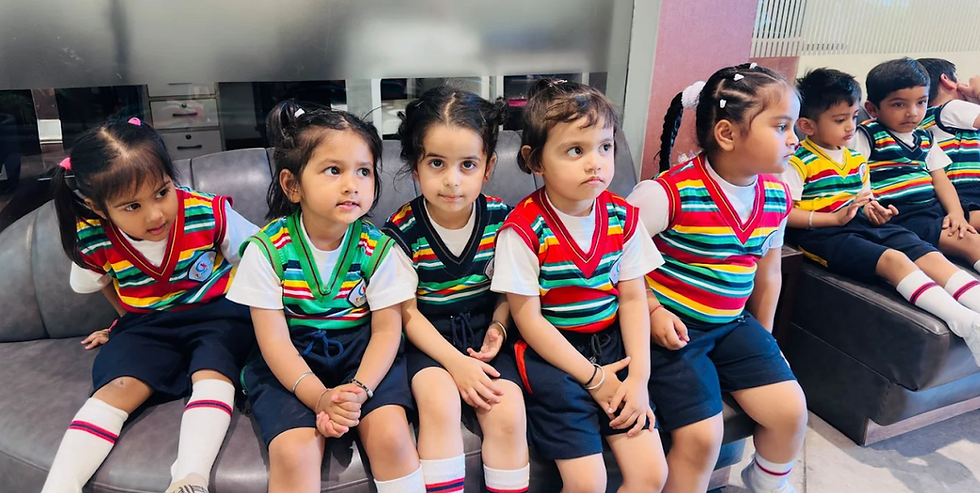
Why Are the Early Years Important for Children?
Early childhood is a very important stage of development. During these years, children learn quickly from their surroundings. They observe, ask questions, copy actions, communicate with others, and develop habits that can support their future learning.
The National Education Policy 2020 gives strong importance to Early Childhood Care and Education. It describes early learning as a foundation for later education and recommends flexible, play-based, activity-based, and inquiry-based learning for young children.
This means that preschool education should not feel like a smaller version of formal school. Instead, children should receive opportunities to explore, play, create, communicate, and learn at a pace suitable for their age.
What Should Parents Look for in a Preschool?
Every child is different, so parents should look beyond attractive classrooms or advertisements when selecting an early learning centre. The overall environment matters.
A good preschool should have caring teachers who understand the needs of young children. Teachers should encourage children to speak, participate, ask questions, and express their thoughts. A warm teacher-child relationship can help children feel comfortable and confident in the classroom.
The learning environment should also be clean, safe, welcoming, and suitable for young learners. Children should have opportunities for both indoor and outdoor activities. Simple things such as storytelling, music, drawing, building blocks, puzzles, role play, and movement can make learning enjoyable.
Parents searching for the Best Kindergarten in Panchkula can also look at how a school balances academic preparation with play, creativity, social development, and physical activities.
Why Is Play-Based Learning So Useful?
Play is one of the most natural ways children learn. When children play with blocks, puzzles, toys, art materials, or role-play activities, they are developing different skills without feeling that they are completing a formal lesson.
For example, building blocks can help children understand shapes, sizes, balance, and coordination. Storytelling can improve listening, vocabulary, imagination, and communication. Drawing and colouring can encourage creativity and fine motor skills. Group games can teach children cooperation, sharing, patience, and simple rules.
Government education guidance also highlights play-based and activity-based learning as important parts of preschool education.
A child-friendly learning approach can make the transition to primary school more comfortable because children gradually become familiar with classroom routines, communication, group activities, and basic learning concepts.
How Can Preschool Help Build Confidence?
Confidence does not develop overnight. Young children need regular opportunities to speak, participate, make choices, and try new things.
A supportive classroom can give children many small opportunities to build confidence. A child may begin by answering a simple question, later participate in a group activity, and eventually feel comfortable speaking in front of classmates.
Teachers can support this development by appreciating effort instead of focusing only on correct answers. When children feel safe making mistakes, they are more willing to explore and learn.
Activities such as show-and-tell, storytelling, singing, drawing, dancing, role play, and classroom conversations can provide natural opportunities for self-expression.
How Do Teachers Influence Early Learning?
Teachers have an important role in early childhood education. At this stage, children need more than someone who can teach basic concepts. They need adults who can understand their emotions, encourage curiosity, and create a positive classroom atmosphere.
A good early-years teacher observes how children interact, learns about their interests, and uses suitable activities to keep them engaged. Different children may learn in different ways. Some may enjoy stories, while others may learn better through movement, pictures, games, or hands-on activities.
This is why parents should understand the teaching approach before selecting a school. The National Education Policy also supports developmentally appropriate and engaging learning experiences during the foundational stage.
What Role Do Activities Play in Preschool Education?
Activities make learning more interesting and meaningful for young children. Instead of simply memorising information, children can understand concepts by seeing, touching, creating, moving, and experimenting.
Art and craft activities can support creativity and fine motor development. Music and movement can encourage rhythm, coordination, and self-expression. Outdoor play can support physical development. Puzzles and sorting activities can encourage logical thinking. Story sessions can develop language and imagination.
Celebrations, theme-based activities, nature walks, classroom projects, and simple experiments can also help children connect learning with the world around them.
The aim is not to overload young children with activities. The aim is to provide the right balance between learning, play, rest, interaction, and exploration.
Why Should Parents Consider Social Development?
Education is not only about academic skills. Children also need to learn how to interact with others.
A preschool classroom gives children an opportunity to meet other children, share materials, follow simple instructions, wait for their turn, communicate their feelings, and work together.
These everyday interactions can gradually develop social and emotional skills. Children learn that other people may have different ideas, feelings, and preferences.
Group activities can be particularly useful because children learn cooperation while completing simple tasks together. Such experiences can also help children become more comfortable in a structured learning environment.
How Can Parents Choose the Right Learning Environment?
Parents should visit a school whenever possible and observe the environment. They can look at the classroom setup, teacher-child interaction, cleanliness, safety arrangements, activity areas, and general atmosphere.
It is also useful to ask questions about the daily routine. Parents can ask how much time children spend on activities, how teachers handle individual learning needs, how parents receive updates, and how the school prepares children for the next stage.
A balanced routine can include learning sessions, storytelling, creative activities, physical play, social interaction, and quiet time. Such a routine gives children opportunities to develop different skills throughout the day.
When comparing options for the Best Kindergarten in Panchkula, parents should focus on the complete learning experience rather than considering only one feature.
Why Is Parent-School Communication Important?
Parents and teachers play different but connected roles in a child's development. Regular communication can help both understand the child's progress, interests, strengths, and areas where additional support may be useful.
Parents can share information about a child's interests and behaviour at home, while teachers can share observations from the classroom. This creates a stronger connection between home and school.
Communication can happen through meetings, messages, progress updates, classroom activities, or regular conversations. The important point is that parents should feel informed and involved in their child's early learning journey.
What Makes Learning Enjoyable for Young Children?
Children learn best when they feel comfortable and interested. A joyful learning environment can encourage them to participate instead of feeling pressured.
Simple experiences can make a big difference. A story can introduce new words. A song can help children remember concepts. A nature activity can encourage observation. A group game can teach cooperation. A craft project can turn an idea into something children can see and touch.
This type of learning also supports curiosity. Instead of giving every answer immediately, teachers can encourage children to think, ask questions, and explore possibilities.
Early childhood education guidance in India similarly promotes learning through play, activities, discovery, communication, and creative experiences.
How Can Preschool Prepare Children for Primary School?
A strong preschool foundation can make the transition to primary school smoother. Children gradually become familiar with classroom routines, listening to teachers, participating in group activities, communicating with classmates, and completing age-appropriate tasks.
School readiness does not mean forcing children to complete advanced academic work at an early age. It means helping them develop the physical, social, emotional, language, and cognitive abilities they need for the next stage.
The Ministry of Education's Vidya Pravesh guidelines also describe play-based preparation as a way to create a welcoming and joyful transition into Grade I.
Parents should therefore look for an early learning environment that builds a strong foundation while keeping childhood enjoyable.
A Balanced Approach Can Make a Difference
The right preschool experience can influence how children feel about learning. When children associate education with curiosity, creativity, friendship, and discovery, they can develop a more positive attitude towards school.
A balanced approach combines age-appropriate academics with play, art, music, movement, storytelling, social interaction, and outdoor experiences. It also gives teachers the opportunity to understand individual children and support their development.
For parents exploring options for early education, the goal should be to find an environment where children feel safe, valued, encouraged, and excited to learn.

Conclusion
Choosing a school for the early years requires careful thought because these years create the foundation for future learning and development. A good Preschool in Panchkula should provide a caring environment, engaging activities, supportive teachers, and opportunities for children to grow socially, emotionally, physically, and intellectually.
Parents searching for the Best Kindergarten in Panchkula should consider the complete educational experience, including teaching methods, safety, activities, communication, classroom environment, and preparation for primary education. When learning is joyful and developmentally appropriate, children can build confidence and curiosity while enjoying their early school years.


Comments