


Why Is Choosing the Right Early Learning School in Panchkula So Important for Your Child?

The early years of a child’s life are full of curiosity, imagination, questions, and discovery. During this stage, children learn not only through books but also through conversations, activities, games, stories, music, movement, and interaction with the world around them. This is why choosing the right Play School in Panchkula can be an important decision for parents who want to give their child a happy and confident beginning.
A good early learning environment should make children feel comfortable while encouraging them to explore new ideas. It should provide opportunities for social interaction, creative expression, physical activity, communication, and age-appropriate learning. Parents looking at Kindergarten Schools in Panchkula should therefore consider more than just academics. The school’s teaching approach, classroom environment, educators, activities, safety, and communication with parents can all influence a child’s early experience.
Tinkerbelle follows a child-centered and play-based approach where children are encouraged to learn through exploration and meaningful activities. Its programs include Playway, Foundation Year I, Foundation Year II, and Foundation Year III, covering the early years from Pre-Nursery through UKG.

Why Are the Early Years So Important?
Early childhood is a time when children develop many basic abilities that support their future learning. They begin to communicate more clearly, understand routines, build friendships, express emotions, solve simple problems, and become more independent.
A preschool should therefore not be viewed simply as a place where children learn alphabets and numbers. It is an environment where they learn how to participate in a group, listen to others, share materials, follow simple instructions, express their ideas, and become comfortable away from home.
When learning is enjoyable, children are more likely to develop a positive attitude toward school. Instead of feeling pressured to memorize information, they can understand concepts through activities that match their age and interests.
What Makes a Good Early Learning Environment?
Every child is different. Some children are naturally talkative, while others take time to become comfortable in a new environment. Some enjoy drawing and creative activities, while others prefer building, movement, music, or imaginative play.
A good school understands these differences. Rather than expecting every child to learn in exactly the same way, teachers can provide different opportunities for children to participate and express themselves.
The classroom environment also matters. Young learners benefit from spaces that encourage exploration without making learning feel stressful. Colorful learning materials, books, toys, activity areas, and interactive resources can make the classroom more engaging.
At Tinkerbelle, classrooms are designed to encourage curiosity and imagination. The school also uses interactive smart boards, learning centres, props, books, and activity-based resources to support experiential learning.
How Does Play-Based Learning Help Children?
Play is one of the most natural ways children learn. When children play with blocks, participate in pretend activities, listen to stories, sing songs, create artwork, or take part in group games, they are developing different skills at the same time.
For example, building with blocks can encourage problem-solving and coordination. Storytelling can improve listening and communication. Group games can teach children to cooperate and take turns. Drawing and craft activities can support creativity and fine motor development.
Play-based learning also allows children to make connections between what they see and what they experience. Instead of simply being told an answer, they can discover ideas through hands-on experiences.
This approach can make school more enjoyable and help children become active participants in their own learning.
What Should Parents Look for When Choosing a School?
Parents often compare schools based on location, fees, facilities, curriculum, and reputation. These factors are important, but it is equally useful to understand how children actually learn during the day.
Ask whether the school provides opportunities for free exploration as well as teacher-guided activities. Find out how teachers communicate with children and whether individual differences are respected. Parents can also ask about classroom routines, outdoor activities, creative programs, safety practices, and communication with families.
Another useful factor is the transition from preschool to kindergarten and later primary education. A well-planned early learning program should gradually help children become more independent and comfortable with structured learning.
Parents exploring Kindergarten Schools in Panchkula should also consider whether the school provides an environment where children can develop socially and emotionally along with their early academic skills.
How Can a School Build Confidence in Young Children?
Confidence does not develop overnight. It grows when children are given opportunities to try, make mistakes, ask questions, and try again.
Teachers play an important role in this process. A supportive teacher can encourage a shy child to participate, help a child solve a problem independently, or appreciate a child’s creative idea.
Simple classroom experiences can make a big difference. Asking children to tell a story, show their artwork, participate in a group activity, choose a learning material, or help with a classroom task can gradually make them more comfortable expressing themselves.
At Tinkerbelle, the learning philosophy focuses on curiosity, creativity, confidence, self-awareness, self-reliance, and self-reflection. The school describes its curriculum as inquiry-based and designed around children’s individual strengths and competencies.
Why Are Social Skills Important at Preschool Age?
Children need more than academic knowledge to succeed in school and everyday life. They also need to learn how to communicate, cooperate, listen, share, and manage simple disagreements.
Preschool provides one of the first regular opportunities for many children to interact with a larger group of peers. Through group activities and classroom routines, children begin to understand that other people may have different ideas, feelings, and preferences.
Activities such as group storytelling, music, games, creative workshops, and collaborative tasks can encourage children to interact naturally.
Tinkerbelle includes group interaction, creative workshops, field trips, and mindfulness among its student programs. These experiences are intended to support broader development beyond basic classroom learning.
How Does a Child-Friendly Curriculum Support Learning?
A good curriculum for young children should be structured but flexible. Children need routines because routines help them understand what comes next. At the same time, they need opportunities to explore and make choices.
Tinkerbelle’s curriculum includes Playway for Pre-Nursery, Foundation Year I for Nursery, Foundation Year II for LKG, and Foundation Year III for UKG. The school states that its program follows the expectations of the National Education Policy and uses evolving teaching methods based on child development.
This kind of progression can help children become familiar with learning gradually. Each stage can introduce age-appropriate experiences while preparing children for the next step.
Why Are Creative Activities Valuable for Young Learners?
Creative activities give children a way to express thoughts that they may not yet be able to explain through words. Painting, drawing, music, dance, storytelling, role-play, and craft activities can encourage imagination and communication.
There is no single correct way for a young child to create something. This gives children freedom to experiment and make decisions.
Creative learning can also support patience and concentration. A child who spends time completing a drawing or building something is learning to focus on a task. When children proudly show their creations to others, they can also develop confidence.
For this reason, parents should look for schools where creativity is a regular part of the learning experience rather than an occasional activity.
What Role Does the Classroom Environment Play?
Young children spend a significant part of their school day inside classrooms, so the physical environment can influence how comfortable and engaged they feel.
A thoughtfully designed classroom can provide different spaces for different kinds of learning. A reading corner may encourage children to explore books, while activity areas can support hands-on experiences. Interactive technology can add another way to introduce concepts when used appropriately.
Tinkerbelle describes its classrooms as bright and engaging spaces with interactive smart boards, toys, books, learning centres, and props designed to encourage exploration and experiential learning.
The goal should always be to use the environment as a support for learning rather than allowing technology or decoration to become the focus.
How Can Parents Support Learning at Home?
A child’s learning does not stop when the school day ends. Parents can support early development through simple everyday activities.
Reading a story together can encourage language development. Asking children about their day can help them express thoughts and feelings. Sorting toys, counting objects, identifying shapes, helping with simple household tasks, and drawing together can turn everyday moments into learning opportunities.
Parents should also allow children time for independent play. Young children need opportunities to imagine, experiment, and create without adults directing every activity.
The most important thing is to keep learning enjoyable. Parents do not need to recreate a classroom at home. Simple conversations, stories, games, outdoor activities, and shared experiences can provide valuable learning opportunities.
Why Is Parent-School Communication Important?
Parents naturally want to know how their child is progressing. Good communication between teachers and parents can help both sides understand a child’s needs, interests, strengths, and areas where additional support may be useful.
Regular updates can also help parents understand what children are learning at school and how they can reinforce those experiences at home.
Tinkerbelle highlights communication between parents and teachers and provides opportunities for parents to stay involved in their child’s learning journey. Parent testimonials on the school website also mention regular updates and responsive communication from educators.
A strong relationship between parents and teachers can create a more consistent and supportive environment for the child.
Why Is Tinkerbelle a Consideration for Parents in Panchkula?
For parents comparing early education options, Tinkerbelle offers programs designed specifically for young learners. Its early years structure covers Pre-Nursery, Nursery, LKG, and UKG, allowing children to progress through different stages of early education.
The school’s approach combines play-based activities, teacher-led learning, independent exploration, and child-initiated experiences. Its website states that children engage in classroom activities as well as experiences such as storytelling, reading, music, dance, aerobics, and stage play.
For families looking for a Play School in Panchkula, the focus should ultimately be on finding an environment where children feel safe, respected, curious, and encouraged to learn.
What Can Parents Expect From a Positive Preschool Experience?
A positive preschool experience should help children gradually become more comfortable with learning and social interaction. Parents may notice changes such as greater confidence, improved communication, increased independence, better participation in group activities, and more curiosity about the world.
These changes may happen at different speeds for different children. Comparing one child with another is rarely helpful because every child develops differently.
The role of the school is to provide suitable opportunities, encouragement, guidance, and care while allowing children to grow at their own pace.
Parents considering Kindergarten Schools in Panchkula should therefore look beyond promotional claims and spend time understanding the school’s philosophy, curriculum, classroom environment, teaching methods, and approach toward children.
Conclusion
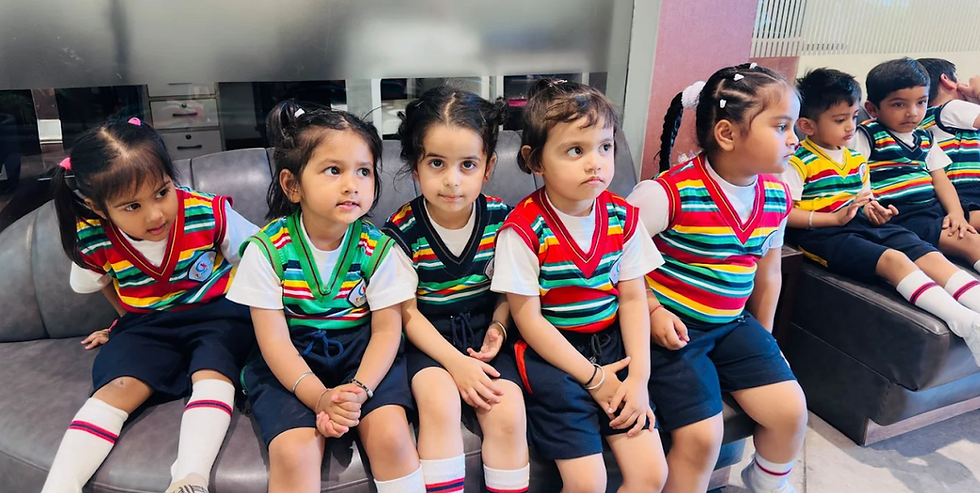
Choosing an early learning school is about giving a child the right environment to begin their educational journey with confidence and happiness. A strong foundation should combine learning with play, creativity, social interaction, communication, and personal growth.
For families searching for a Play School in Panchkula, the ideal choice is one that respects every child’s individuality while creating meaningful opportunities to learn and explore. A child-friendly curriculum, caring educators, engaging classrooms, creative activities, and positive parent-school communication can make the early years more enjoyable and productive.
Tinkerbelle’s play-based and inquiry-focused approach, along with its programs from Pre-Nursery to UKG, provides an option for families looking for a nurturing start. Parents comparing Kindergarten Schools in Panchkula can explore the learning environment, curriculum, facilities, and approach to understand whether it is the right fit for their child.
The goal of early education is not simply to prepare children for the next class. It is to help them become curious, confident, independent, and enthusiastic learners who are ready to discover the world around them.


Comments