


Why Are Kindergarten Schools in Panchkula Important for Your Child’s Early Learning and Overall Development?

Choosing the right school for a young child is one of the biggest decisions parents make. The early years are a special stage when children develop their communication, social, emotional, physical, and thinking skills. A good kindergarten gives children the opportunity to learn naturally while feeling safe, happy, and confident. For parents exploring Kindergarten Schools in Panchkula, it is important to look beyond academics and understand how a school supports the complete development of a child.
A strong early-learning environment should encourage curiosity, creativity, communication, independence, and friendship. A Best Playway School in Panchkula can make this journey even more enjoyable by combining learning with play, activities, stories, music, art, and exploration.

Why Kindergarten Education Matters in the Early Years
Kindergarten is more than preparation for primary school. It is a stage where children begin developing habits and skills that can support them throughout their education. At this age, children are naturally curious and eager to discover new things. The right learning environment gives them the freedom to ask questions, explore ideas, and express themselves.
Instead of expecting young children to sit for long periods and memorize information, modern early education focuses on hands-on experiences. Children can learn numbers through games, improve language through storytelling, understand teamwork through group activities, and develop creativity through art and craft.
This approach makes education enjoyable and helps children develop a positive attitude toward school. When children associate learning with happiness and discovery, they are more likely to participate actively and become confident learners.
What Should Parents Look for in a Kindergarten?
Every child is different, so parents should consider more than the appearance of a school while making their decision. The learning approach, teachers, classroom environment, activities, safety, and communication with parents all matter.
A good kindergarten should have caring educators who understand the needs of young children. Teachers should encourage children rather than pressure them. They should provide opportunities for children to communicate, make choices, solve simple problems, and work with their classmates.
The classroom should also be welcoming and stimulating. Colourful learning resources, books, activity areas, educational toys, and interactive tools can encourage children to explore and learn independently. A safe and comfortable environment allows children to settle into school life with confidence.
Learning Through Play Makes Education More Meaningful
Young children learn best when they are actively involved. Play allows them to understand concepts through experience rather than simply listening to instructions. Building blocks can introduce basic mathematical thinking, puzzles can encourage problem-solving, and pretend play can develop communication and imagination.
Play-based learning also helps children understand social behaviour. When children play together, they learn how to share, cooperate, listen, take turns, and express their feelings. These skills are just as important as early literacy and numeracy.
A Best Playway School in Panchkula creates opportunities for children to learn through meaningful activities while allowing them to enjoy their childhood. This balance between structured learning and exploration can help develop confident and independent learners.
A Child-Centred Approach to Early Education
A child-centred learning environment respects the individual needs and interests of every learner. Children do not all learn at the same speed or in the same way. Some may enjoy drawing and storytelling, while others may prefer building, movement, music, or outdoor activities.
Teachers can observe these interests and provide suitable opportunities for development. This helps children feel valued and encourages them to participate without fear of making mistakes.
A child-centred approach also gives children opportunities to make small decisions. Choosing an activity, selecting a book, arranging materials, or explaining an idea can help build independence. Over time, these small experiences contribute to confidence and self-awareness.
The Importance of Social and Emotional Development
Early education is not only about learning letters, numbers, colours, and shapes. Children also need to learn how to understand their emotions and interact positively with others.
Kindergarten activities can help children develop empathy, patience, communication, and cooperation. Group games encourage teamwork, while storytelling can help children understand different feelings and situations. Classroom routines can teach responsibility and discipline in a gentle and age-appropriate way.
Teachers play an important role in this process. A caring teacher can help a child who feels shy, encourage a child who is hesitant to participate, and guide children when disagreements happen. Such experiences help young learners become emotionally stronger and socially confident.
Why Activities Are Important for Kindergarten Children
Activities give children an opportunity to learn by doing. A well-planned kindergarten day may include storytelling, music, dance, art, craft, sensory activities, outdoor play, role play, group discussions, and creative exploration.
Each activity can support a different area of development. Drawing and colouring can improve fine motor skills, while outdoor games support physical development. Songs and rhymes can help children improve language and memory. Role play encourages imagination and communication.
At Tinkerbelle, the learning environment includes teacher-led small-group sessions, independent directed activities, and child-initiated exploration. The school also provides opportunities for storytelling, reading, music, dance, aerobics, stage play, creative workshops, field trips, group interaction, and mindfulness activities.
This variety ensures that children get opportunities to learn in different ways instead of depending only on traditional classroom instruction.
Building Early Academic Foundations Without Pressure
A quality kindergarten should introduce academic concepts in a way that is suitable for young children. The goal should be understanding rather than excessive memorization.
Children can gradually become familiar with letters, sounds, numbers, shapes, colours, patterns, vocabulary, and basic concepts through games and practical activities. Teachers can connect classroom learning with everyday experiences so that children understand why something is useful.
For example, counting toys can make numbers easier to understand, while identifying objects during a classroom activity can improve vocabulary. Such simple experiences make learning more natural.
The curriculum at Tinkerbelle includes Playway for Pre-Nursery and Foundation Years I, II, and III for Nursery, LKG, and UKG respectively. Its programme emphasizes child development, social-emotional learning, expression, outdoor play, and learning through children's questions and experiences.
Creating a Safe and Comfortable School Environment
Safety and comfort are essential when selecting a school for young children. Parents want their children to feel secure while they are away from home.
A good early-learning centre should provide a clean, welcoming, and child-friendly environment. Classrooms should be designed according to children's needs, with suitable furniture, learning materials, and spaces for different activities.
At Tinkerbelle, classrooms are designed to encourage curiosity and imagination, with interactive smart boards, learning centres, props, books, toys, and opportunities for exploratory play.
A comfortable environment can make the transition from home to school easier, especially for children attending school for the first time.
The Role of Teachers in a Child’s Learning Journey
Teachers are one of the most important parts of early education. A good teacher does more than teach lessons. They observe children, understand their needs, encourage their interests, and create opportunities for them to develop.
Young children may sometimes feel nervous about entering a new environment. Patient and supportive educators can help them become comfortable and gradually participate in classroom activities.
Teachers also help children develop positive habits such as listening, following simple instructions, keeping materials in place, and working with others. These habits become useful as children progress into higher classes.
Parent-School Communication Also Matters
Parents and teachers share an important responsibility in supporting a child's development. Regular communication helps parents understand what their child is learning and where they may need additional encouragement.
Updates about classroom activities, parent-teacher interactions, events, and children's progress can help create a strong connection between home and school. When parents and teachers work together, children receive consistent support.
Tinkerbelle highlights parent connectivity and regular communication as part of its approach, with parents sharing positive experiences about classroom activities and updates on their children's learning.
Preparing Children for the Next Stage of Education
One of the main purposes of kindergarten is to help children become ready for primary education. This does not mean putting academic pressure on them. Instead, children should gradually develop the confidence, independence, communication skills, and learning habits they need for the next stage.
A child who can listen carefully, communicate ideas, participate in group activities, manage simple routines, and approach new experiences confidently is better prepared for a structured school environment.
The transition should therefore happen naturally. Children need time to develop foundational skills while enjoying the process of learning.
How to Choose the Right Kindergarten for Your Child
Parents can begin their search by visiting schools and observing the overall environment. Look at how teachers interact with children, whether classrooms feel welcoming, and whether children appear engaged in activities.
It is also useful to ask about the curriculum, teaching methods, student-teacher interaction, activities, safety practices, parent communication, and age criteria. Understanding the daily routine can help parents decide whether the school is suitable for their child's personality and learning needs.
Rather than choosing a school only because of its reputation or facilities, parents should consider whether its educational philosophy matches what they want for their child.
Why Play-Based Learning Is a Strong Choice
Play-based education gives children space to learn, experiment, make mistakes, and try again. It supports multiple areas of development at the same time.
Through play, children can improve language, motor skills, creativity, reasoning, social interaction, and emotional expression. They can also learn to solve simple problems independently.
For young children, this approach makes school feel less like a place where they are expected to memorize information and more like a place where they can discover the world.
A Thoughtful Start Can Build Lifelong Confidence
The first school experience can influence how children feel about education for years to come. A positive beginning can help children develop curiosity and confidence, while a stressful environment may make learning feel difficult.
That is why parents should choose an environment where children are encouraged to explore and express themselves. The right combination of caring teachers, meaningful activities, play-based learning, safe classrooms, and parent involvement can create a strong foundation.
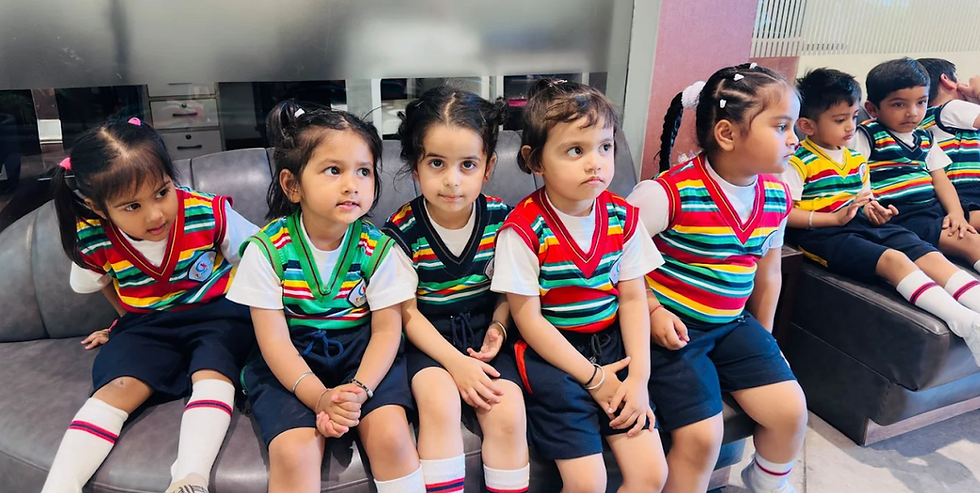
For families comparing Kindergarten Schools in Panchkula, the focus should be on finding a learning environment that supports the whole child rather than academics alone. Tinkerbelle follows a play-based and activity-driven approach designed to nurture curiosity, creativity, confidence, and social-emotional development.
Conclusion
Choosing a kindergarten is about choosing the environment in which your child will take some of their first important steps toward independent learning. The right school should make children feel safe, respected, curious, and excited to participate.
A Best Playway School in Panchkula can provide this kind of beginning by combining structured learning with play, creativity, interaction, and exploration. For parents considering Kindergarten Schools in Panchkula, it is worth looking for a school that focuses on holistic development, caring educators, meaningful activities, and a child-friendly learning environment. With the right start, children can develop the confidence, curiosity, and skills they need to enjoy learning today and embrace new opportunities tomorrow.


Comments