


What Should Parents Look for When Choosing a Preschool in Panchkula for Their Child?

Choosing the right school for a young child is one of the most important decisions parents make. The preschool years are not only about learning alphabets, numbers, colours, or rhymes. They are about helping children become confident, curious, independent, and comfortable in a learning environment. A good Preschool in Panchkula should give children opportunities to explore, interact, play, ask questions, and learn at their own pace. For parents also looking for the Best Kindergarten in Panchkula, it is important to consider the school’s teaching approach, environment, teachers, activities, and overall focus on child development.
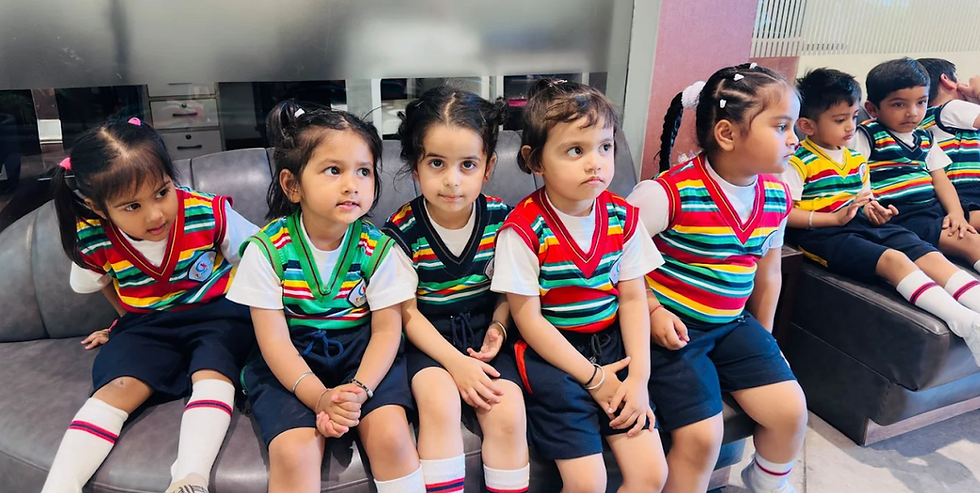
Why Are Preschool Years So Important?
The early years create a strong foundation for a child’s future learning. At this stage, children are naturally curious and learn by observing, touching, talking, moving, playing, and experimenting. A nurturing environment can help develop language, communication, motor skills, social behaviour, creativity, and emotional confidence.
According to India’s Ministry of Women and Child Development, play is a natural and important way for young children to learn. Play-based experiences can support observation, experimentation, problem-solving, creativity, social relationships, and learning by doing.
This is why parents should look beyond academic worksheets when selecting an early learning centre. The right school should make children feel happy and secure while encouraging them to discover something new every day.
What Makes a Good Preschool?
A good preschool combines learning with fun. Children should not feel that they are entering a place where they have to sit quietly and memorise information for long periods. Instead, the classroom should encourage participation and exploration.
A child-friendly preschool generally provides age-appropriate activities that support different areas of development. Storytelling can improve listening and language skills, while art and craft can encourage creativity and fine motor development. Music and movement can help children express themselves, while group activities can teach sharing, cooperation, and communication.
The learning environment also matters. Bright, welcoming classrooms, suitable learning materials, books, toys, activity areas, and opportunities for movement can make the school experience more engaging for young children.
Why Is Play-Based Learning Important?
Play is one of the most natural ways children understand the world. When children build with blocks, create artwork, participate in role-play, listen to stories, sing songs, or explore their surroundings, they are learning important skills without feeling pressured.
Play-based learning can support problem-solving, imagination, communication, coordination, and social interaction. It also gives children the opportunity to make choices and learn from their experiences.
A modern preschool should therefore provide a healthy balance between teacher-guided activities, independent exploration, and child-initiated learning. Tinkerbelle follows a play-based and activity-driven approach that includes small-group teacher-led sessions, independent directed learning, and child-initiated exploration.
How Can the Right School Build Confidence?
Confidence does not develop only through academic achievement. Young children become confident when they are encouraged to speak, participate, make choices, try new activities, and interact with others.
A supportive teacher can play an important role in this process. Instead of expecting every child to learn in exactly the same way, teachers should understand that children develop at different speeds.
Activities such as storytelling, group discussions, creative workshops, music, dance, role-play, and classroom games can give children opportunities to express themselves. Field trips and group activities can also introduce children to experiences beyond the classroom.
Tinkerbelle’s student programmes include field trips, creative workshops, group interaction, and mindfulness activities, supporting development beyond traditional classroom learning.
What Should Parents Check Before Admission?
Parents should spend some time researching a school before making a decision. A school may look attractive from the outside, but parents should also understand what happens inside the classroom.
Start by looking at the teaching methodology. Ask whether children learn through activities and experiences or mainly through worksheets and memorisation. Understand how teachers communicate with children and whether individual attention is provided.
Parents should also ask about the daily routine. A healthy preschool routine should include learning, play, movement, creative activities, social interaction, and suitable breaks.
Safety and cleanliness are equally important. Parents should observe the classroom environment, entry and exit arrangements, play areas, hygiene practices, and general supervision.
Most importantly, parents should notice how teachers interact with children. A warm, patient, and respectful teacher can make a significant difference to a child's first experience of school.
How Does a Kindergarten Programme Prepare Children for the Future?
Kindergarten is an important bridge between early childhood and more structured schooling. Children gradually become familiar with routines, communication, classroom participation, basic concepts, and independent tasks.
The Best Kindergarten in Panchkula should therefore focus on more than academic preparation. Children should develop confidence, curiosity, communication, social awareness, and a positive attitude towards learning.
A well-planned programme can help children move gradually from free exploration towards more structured activities while still keeping learning enjoyable. The goal should not be to rush children into advanced academics but to prepare them with the skills they need for the next stage.
A Child-Centred Approach Makes Learning More Meaningful
Every child is different. Some children may quickly participate in group activities, while others may need more time to become comfortable. Some may love drawing and music, while others may prefer building, storytelling, or outdoor exploration.
A child-centred preschool recognises these differences. Instead of comparing children with one another, educators can provide opportunities that allow each child to grow according to their abilities and interests.
Tinkerbelle describes its learning philosophy as child-centred, with a focus on curiosity, creativity, confidence, and personalised attention. Its programme is designed around children's questions and engagement with the world around them.
What Learning Areas Should a Preschool Include?
Early childhood education should support multiple areas of development. Language is important because children need to communicate their ideas, feelings, and needs. Basic mathematical concepts help children understand numbers, patterns, shapes, sizes, and relationships.
Physical development is also essential. Activities involving movement, coordination, drawing, cutting, building, and outdoor play can support gross and fine motor skills.
Social and emotional development deserves equal attention. Children need to learn how to share, cooperate, wait for their turn, express feelings, solve simple disagreements, and form relationships with peers.
Creative activities add another important dimension. Painting, music, dance, storytelling, pretend play, and craft allow children to use their imagination and express themselves freely.
Why Parent-Teacher Communication Matters
Parents and teachers share an important role in a child's early development. Regular communication helps parents understand how their child is adjusting, participating, learning, and interacting with others.
Good communication also allows teachers to understand the child's interests and habits outside school. When parents and educators work together, they can provide more consistent support for the child.
Parents should therefore consider whether the school keeps families informed about classroom activities and their child's progress. Regular updates can help parents feel connected to their child's learning journey.
What Makes Tinkerbelle a Consideration for Parents?
Parents searching for a Preschool in Panchkula often want a combination of caring teachers, engaging activities, age-appropriate learning, and a positive environment. Tinkerbelle provides programmes from Playway through Foundation Year III, covering Pre-Nursery, Nursery, LKG, and UKG.
Its classrooms are designed to encourage curiosity and interactive learning, with learning centres, books, props, toys, and interactive smart boards. The school also incorporates activities such as creative workshops, field trips, group interaction, storytelling, music, dance, and other experiences.
The aim is to make learning enjoyable while supporting the child's cognitive, social, emotional, physical, and creative development.
Creating a Positive First School Experience
A child's first school experience can influence how they feel about education for years to come. If the environment is welcoming and enjoyable, children can begin developing a positive attitude towards learning.
Parents should therefore look for a school where children are encouraged rather than pressured. The classroom should provide opportunities to explore, ask questions, make mistakes, try again, and celebrate small achievements.
The transition to school can also be easier when children become familiar with routines gradually. Simple activities such as greeting teachers, putting away belongings, joining group sessions, and participating in classroom activities can help children become more independent.
How Can Parents Make the Right Choice?
There is no single school that is perfect for every child. The right choice depends on the child's age, personality, learning needs, family preferences, location, and the type of educational environment parents value.
Before admission, parents can visit the school, observe classrooms, speak with educators, understand the curriculum, ask about activities, and learn about the daily routine. It is also useful to understand the age criteria and programmes offered by the school.
For example, Tinkerbelle lists Playway for children below three years, Foundation Year I for Nursery, Foundation Year II for LKG, and Foundation Year III for UKG, with age criteria based on March 31, 2026.
Taking time to research these details can help parents make a more informed decision.

Conclusion
Choosing an early learning centre is about finding the right beginning for your child's educational journey. The ideal school should provide a safe, welcoming, and stimulating environment where children can learn through play, develop social skills, express themselves creatively, and gradually become more independent.
For families exploring a Preschool in Panchkula, factors such as teaching methodology, teacher support, child-centred learning, activities, classroom environment, and parent communication should all be considered before admission. A strong early foundation can make the transition to formal education smoother and more enjoyable.
For parents searching for the Best Kindergarten in Panchkula, the focus should ultimately be on a school that understands childhood, encourages curiosity, and makes learning a joyful experience. With the right environment and guidance, the early school years can become a meaningful foundation for confident, capable, and lifelong learners.


Comments