


How Can Parents Choose the Right Preschool in Panchkula for Their Child’s Bright Future?

Choosing the first school for a child is an important decision for every parent. The early years are a time when children begin to understand the world, develop communication skills, make friends, and discover their interests. A good early learning environment should therefore be more than a classroom. It should be a place where children feel comfortable, curious, confident, and ready to learn.
For parents looking for a Preschool in Panchkula, there are many things to consider before making a decision. The teaching approach, classroom environment, safety, activities, teacher-child interaction, curriculum, and opportunities for social development all matter. Parents should look for a school that understands the needs of young children and makes learning enjoyable rather than stressful.
A child-friendly environment can help children develop positive learning habits from the beginning. A Best Playway School in Panchkula should give children opportunities to learn through stories, games, creative activities, interaction, exploration, and hands-on experiences. This approach helps children enjoy school while gradually developing important skills for their future education.
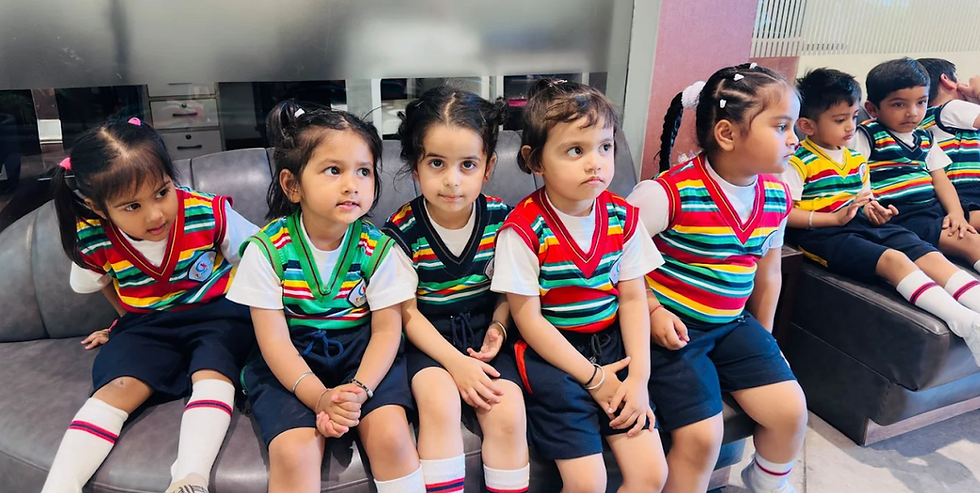
Why Are the Early Years So Important for Children?
The preschool years are a foundation for many important areas of development. Children are naturally curious during this stage. They want to ask questions, explore objects, communicate their thoughts, and understand what happens around them.
Early education can help channel this curiosity in positive ways. Instead of expecting children to sit quietly and memorize information for long periods, a good preschool introduces concepts through age-appropriate activities.
For example, children can learn basic numbers through counting games, recognize colours through art activities, and develop language skills through stories and conversations. Music, movement, role play, and group activities can also help children express themselves.
The goal should not simply be to prepare children for examinations. Preschool education should help them become comfortable with learning itself. When children associate school with positive experiences, they may become more willing to participate, ask questions, and try new things.
What Should Parents Look for in a Preschool?
Choosing a preschool requires careful observation. Parents should not make a decision based only on advertisements, attractive buildings, or location. Visiting the school and understanding its learning environment can provide much better insight.
One of the first things to consider is whether the school provides a safe and welcoming environment. Young children need spaces where they can move, explore, play, and learn under appropriate supervision. Clean classrooms, child-friendly furniture, organised learning areas, and suitable play spaces can contribute to a comfortable school experience.
Teachers are equally important. Early childhood educators need patience, understanding, and the ability to communicate with young children. Children may learn at different speeds, and teachers should be able to encourage participation without creating unnecessary pressure.
Parents should also ask how the school communicates with families. Regular communication can help parents understand what their child is learning and how the child is progressing.
How Does Play-Based Learning Help Young Children?
Play is one of the most natural ways children learn. Through play, children can explore ideas, communicate with others, solve simple problems, and develop their imagination.
A play-based approach does not mean that children are simply left to play without direction. Well-planned activities can have specific learning objectives while remaining enjoyable for children.
Storytelling, building activities, drawing, music, puzzles, pretend play, movement exercises, and group games can introduce different concepts in an engaging way. These activities can support cognitive, physical, social, and emotional development.
Tinkerbelle follows a play-based and activity-driven learning approach, combining teacher-led small-group sessions, independent directed learning, and child-initiated exploration. Its curriculum also places emphasis on child development, social-emotional learning, expression, and outdoor play.
This type of learning environment can make children active participants instead of passive listeners. They get opportunities to explore concepts and learn from their experiences.
Why Is Social Development Important at Preschool Age?
Children do not only learn academic concepts at preschool. They also learn how to interact with people.
For many children, preschool may be their first regular experience outside the home where they spend time with a group of other children. This makes social development an important part of early education.
Group activities can teach children how to share materials, wait for their turn, listen to others, express their ideas, and cooperate with classmates. These simple experiences can gradually build communication and teamwork skills.
Children may also learn how to manage emotions. They can begin to understand feelings such as happiness, disappointment, excitement, and frustration. Supportive teachers can help children express these emotions appropriately.
A preschool that gives importance to social and emotional development can therefore help children become more comfortable in group environments.
What Kind of Curriculum Is Suitable for Preschool Children?
A suitable preschool curriculum should be age-appropriate, flexible, engaging, and focused on overall development. Young children should not be burdened with complicated academic expectations.
The learning process can include language development, early mathematics, creative expression, physical activities, environmental awareness, social interaction, music, stories, and practical experiences.
Tinkerbelle currently offers Playway or Pre-Nursery, Foundation Year I or Nursery, Foundation Year II or LKG, and Foundation Year III or UKG. Its curriculum describes learning as immersive, fun, and productive, with activities shaped around children's questions and experiences.
Such a structure allows children to progress through different stages of early education while developing age-appropriate skills.
How Can Classroom Activities Make Learning More Interesting?
Children learn better when they are actively involved. A classroom should therefore provide opportunities for children to participate instead of simply listening to instructions.
Creative activities can encourage imagination. Drawing, colouring, craft, music, dance, storytelling, and role play can help children express themselves.
Interactive activities can also make basic academic concepts easier to understand. For example, counting objects can make numbers more meaningful than simply looking at numbers on a worksheet. Similarly, storytelling can introduce vocabulary and communication skills naturally.
Tinkerbelle's published information highlights storytelling and reading spaces, music activities, dance, aerobics, stage play, creative workshops, group interaction, field trips, and mindfulness activities as parts of its broader learning environment.
This balance between structured learning and exploration can help keep young learners engaged.
Why Do Classrooms and Learning Spaces Matter?
The physical environment can influence how children feel about school. Bright, organised, child-friendly spaces can encourage children to explore and participate.
Learning areas should provide children with age-appropriate resources. Books, toys, learning materials, creative supplies, and interactive tools can support different types of learning.
Tinkerbelle describes its classrooms as spaces designed to encourage curiosity and imagination, with colourful furniture, engaging displays, toys, learning centres, props, books, and interactive smart boards.
A thoughtfully planned classroom can give children different ways to learn. Some children may enjoy stories, while others may prefer building, drawing, movement, or hands-on activities. Offering varied experiences can help accommodate these different interests.
How Can Parents Prepare Their Child for Preschool?
Parents can make the transition to school easier by introducing simple routines at home. Children can gradually become comfortable with waking up, getting ready, eating at regular times, and following simple instructions.
Parents can also talk positively about school. Instead of creating fear around the first day, they can explain that school is a place where children meet teachers, make friends, play, and learn new things.
Encouraging independence is another useful step. Children can practise simple tasks such as putting away toys, carrying their water bottle, choosing between two outfits, or keeping their belongings in a particular place.
Reading books together can also help children develop language skills and become familiar with storytelling. Parents should give children opportunities to speak, ask questions, and describe their experiences.
Most importantly, parents should understand that every child adjusts at a different pace. Some children may become comfortable quickly, while others may need more time and reassurance.
What Makes a Preschool a Positive First Step?
A positive preschool experience should make children feel safe, valued, and encouraged. The school should create opportunities for children to learn without unnecessary pressure.
Parents searching for a Best Playway School in Panchkula should therefore look beyond the basic facilities and understand the school's complete approach to early education. The relationship between teachers and children, classroom activities, learning resources, communication with parents, and opportunities for exploration can all contribute to the child's experience.
It is also useful to consider how the preschool prepares children for their next educational stage. A strong foundation in communication, confidence, independence, social skills, and early learning can make the transition to primary education smoother.
The aim of preschool should be to develop a positive attitude toward learning. Children should gradually understand that asking questions, trying something new, making mistakes, and trying again are all natural parts of learning.
Why Is Parent-School Communication Important?
Parents and teachers share an important role in a child's early development. Teachers observe children in a group environment, while parents understand their child's personality and habits at home.
Regular communication allows both sides to share useful observations. Parents can learn about classroom participation, interests, social interaction, and learning progress. Teachers can also understand the child's needs and preferences better when parents communicate openly.
Tinkerbelle states that its parent communication system is designed to help families stay connected with school updates and track children's progress.
Good communication can create a stronger connection between home and school. When children receive consistent encouragement in both environments, they may feel more secure and supported.
How Should Parents Make the Final Choice?
There is no single formula for choosing a preschool because every child and family has different needs. Parents should consider practical factors such as location, timings, programs, teaching methods, communication, activities, and overall environment.
A school visit can be especially useful. Parents can observe the classrooms, ask questions, understand the curriculum, and discuss their child's needs with the school team.
It is also important to understand the admission process and the age criteria for different programs. According to the current curriculum information, Tinkerbelle's Playway program is for children below three years, followed by Nursery, LKG, and UKG stages based on age.
Parents should choose an environment where their child can gradually develop confidence and a love for learning.

Conclusion: Is the Right Preschool the Beginning of a Better Learning Journey?
The first school experience can influence how children feel about learning for years to come. A caring environment, engaging activities, supportive teachers, and age-appropriate learning can help children develop confidence, curiosity, communication, and independence.
When searching for a Preschool in Panchkula, parents should take time to understand what each school offers rather than making a decision based on one factor. The right environment should balance learning with play and provide children with opportunities to explore, interact, create, and express themselves.
A Best Playway School in Panchkula should ultimately focus on the whole child. When children receive the right support during their early years, they can build a strong foundation for the educational journey ahead. For parents, visiting the school, speaking with educators, and understanding the learning philosophy can help them make an informed choice for their child's first step into education.


Comments